

Epilepsy & seizure medical ID bracelets
A seizure medical ID tells bystanders and responders what is happening and who to call, so you get the right care and fewer unnecessary ER trips. Personalized for free.
Why people with epilepsy wear a medical ID
After a seizure you may be confused or unable to speak for a while. People around you may not know if it's a seizure, a drug reaction or something else.
An engraved ID tells them you have epilepsy, which medication you take, and who to call. Some people also add a short instruction, like how long a typical seizure lasts.
What to include
- Your name
- "Epilepsy" or "Seizure Disorder"
- Your seizure medication (On Keppra)
- A short instruction if your doctor recommends one
- An emergency contact (ICE)
Engraving examples
Keep it short so it is read in seconds by someone helping you.
Condition, medication, contact
Tells others what is normal for you
For a smaller tag
Medical IDs for epilepsy
Durable pieces that stay on, engraved with your information at no extra cost.
-
Unisex Silicone Medical ID Bracelet
Regular price $21.99 USDRegular priceUnit price per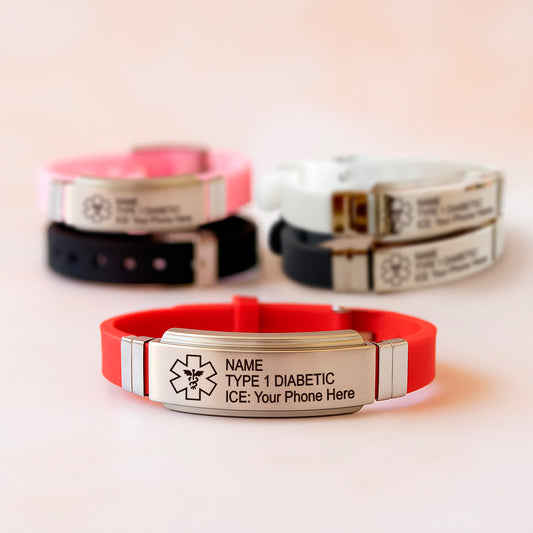

-
Adjustable Sport Medical ID Bracelet
Regular price $19.99 USDRegular priceUnit price per

-
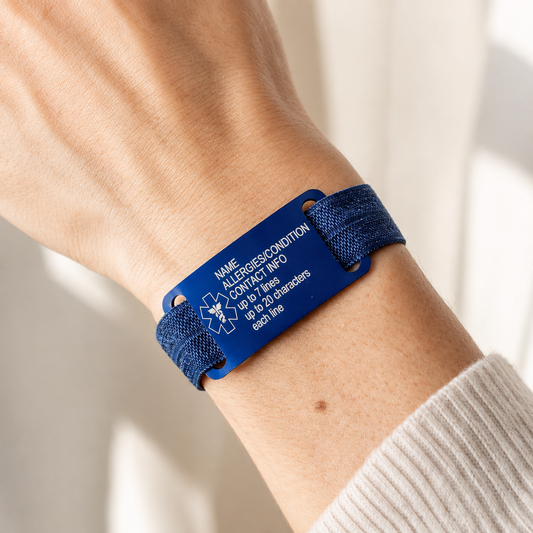
Elastic Medical ID Bracelet Tag Band
Regular price $18.50 USDRegular priceUnit price per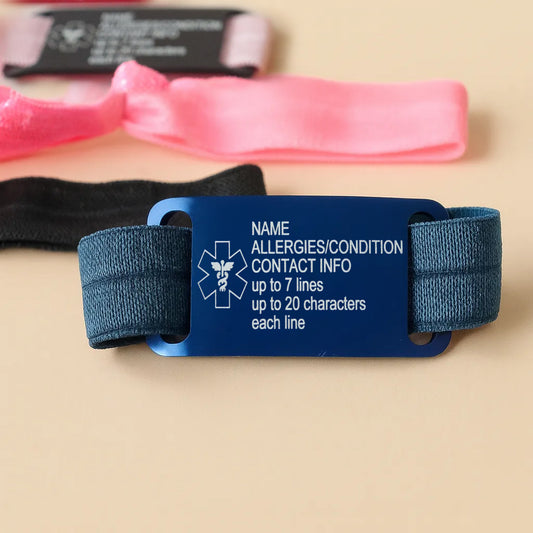
-
Kids’ Engraved Medical ID Bracelet
Regular price $21.99 USDRegular priceUnit price per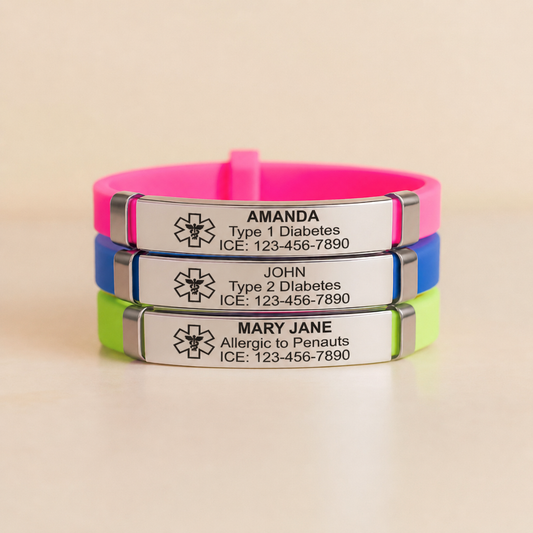

-
Women’s Medical ID Mesh Bracelet
Regular price $22.50 USDRegular priceUnit price per

-
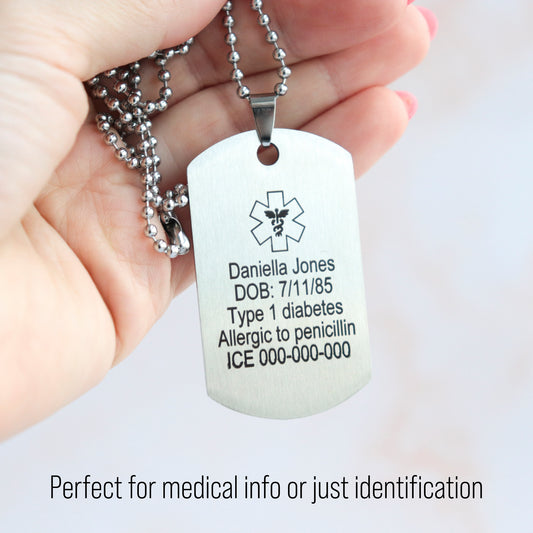
Military-Style Medical ID Necklace
Regular price $18.99 USDRegular priceUnit price per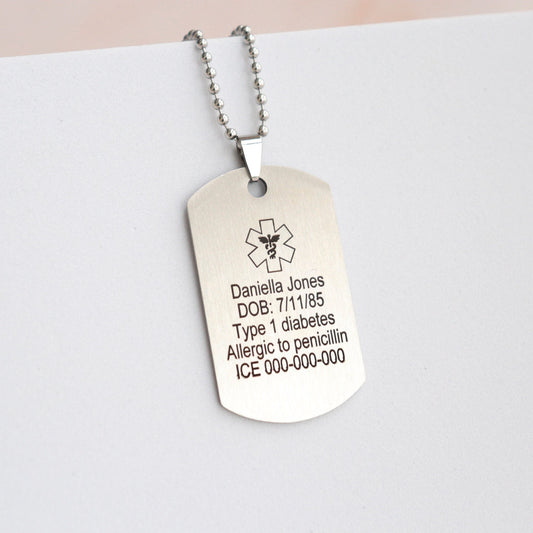
-
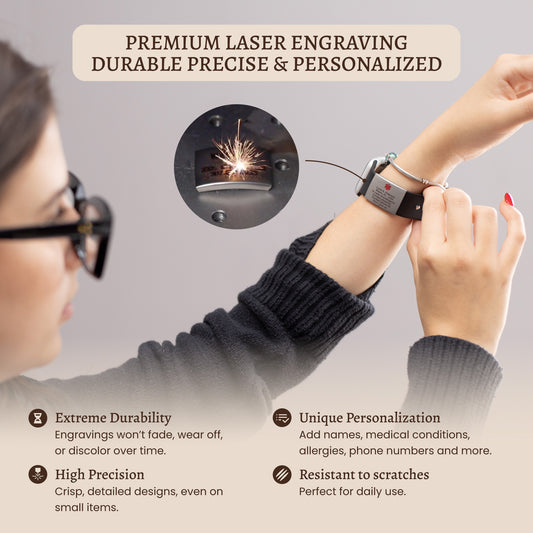
Medical ID Nameplate for Smartwatch Bands
Regular price From $18.50 USDRegular priceUnit price per
-
Scannable QR Code Sport Medical ID Bracelet
Regular price $24.99 USDRegular priceUnit price per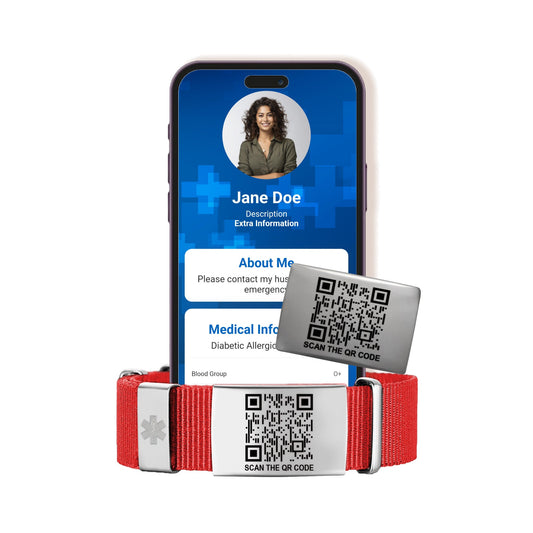


Choosing the right piece
- Silicone and elastic bands are comfortable to wear day and night.
- Avoid long dangling necklaces if seizures involve strong movements; a short chain or bracelet is safer.
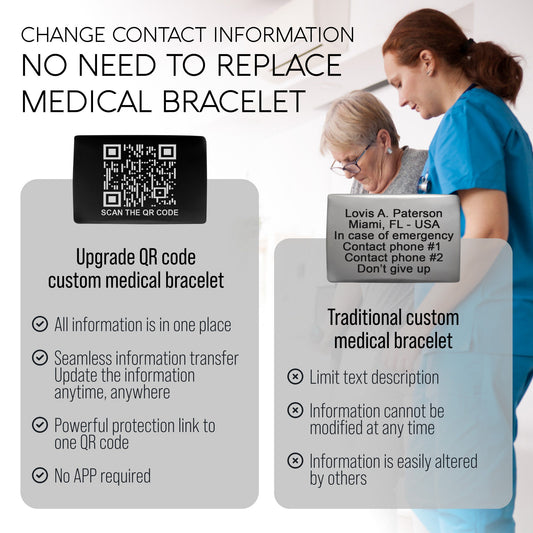
- A QR medical ID can hold your seizure action plan for responders to scan.
- For kids, pick a band they like so it stays on at school.
Questions
Should I engrave my seizure medication?
Yes, if it fits. It helps responders understand your condition and avoid drug interactions.
Can I add seizure first-aid instructions?
Short ones, yes, like "Usually 2-3 min". Longer instructions fit better on a wallet card or QR profile.
Is a bracelet or a necklace better?
Both work. Bracelets are seen first; many people with active seizures prefer a secure bracelet over a long chain.
This page is general information, not medical advice. Ask your doctor what should be on your medical ID.