

Autism ID bracelets for kids & adults
An autism ID helps responders, police and strangers understand behavior and communication, and gets your loved one home faster if they wander. Engraved for free in our Florida studio.
Why families choose an autism ID
In a stressful situation, an autistic person may not respond to their name, may avoid eye contact or may not be able to speak. Without context, that can be misread.
An ID gives first responders the context in a glance and a way to reach a parent or caregiver. QR IDs can also hold a full profile with calming tips and medical needs.
What to include
- Name
- "Autism"
- How they communicate: "Non-Verbal", "May Not Respond"
- Any allergy or medical condition
- A parent or caregiver phone number
Engraving examples
Describe what responders will see, in plain words.
The most common layout
Explains behavior
For independent adults
Autism IDs for kids & adults
Soft, comfortable bands for sensory needs, plus QR options that hold a full profile.
-
Kids’ Engraved Medical ID Bracelet
Regular price $21.99 USDRegular priceUnit price per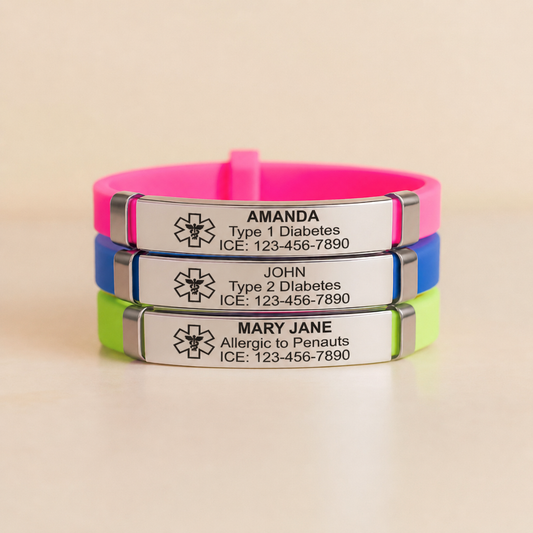

-
Kids’ Personalized Medical ID Bracelet
Regular price $23.99 USDRegular priceUnit price per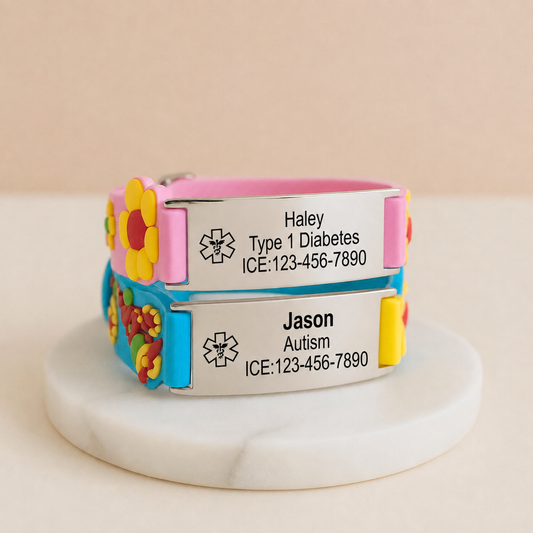

-
Kids’ QR Code Medical ID Bracelet
Regular price $23.99 USDRegular priceUnit price per

-
Elastic Medical ID Bracelet Tag Band
Regular price $18.50 USDRegular priceUnit price per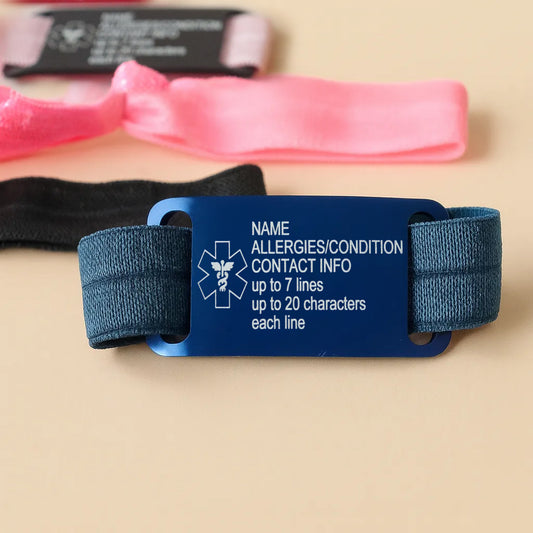
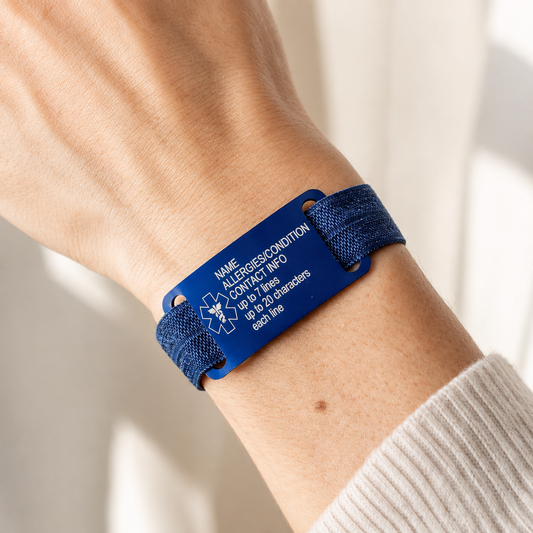
-
Unisex Silicone Medical ID Bracelet
Regular price $21.99 USDRegular priceUnit price per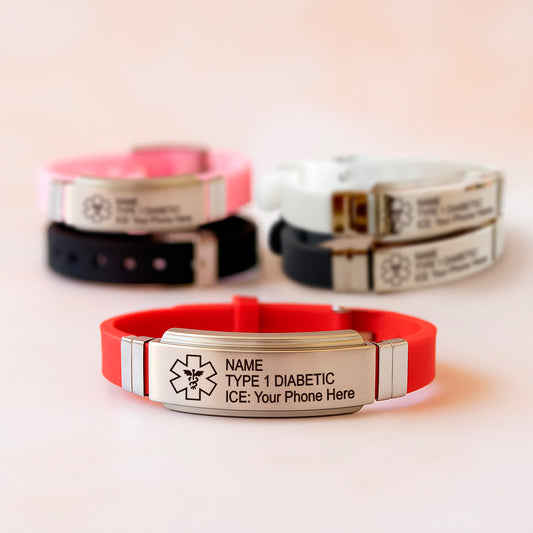

-
Scannable QR Code Sport Medical ID Bracelet
Regular price $24.99 USDRegular priceUnit price per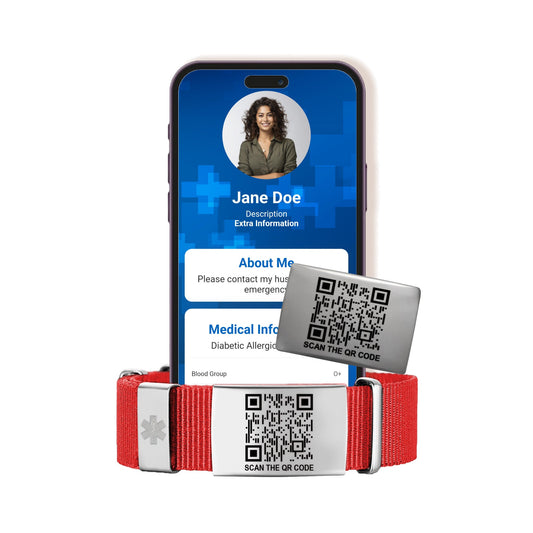
-
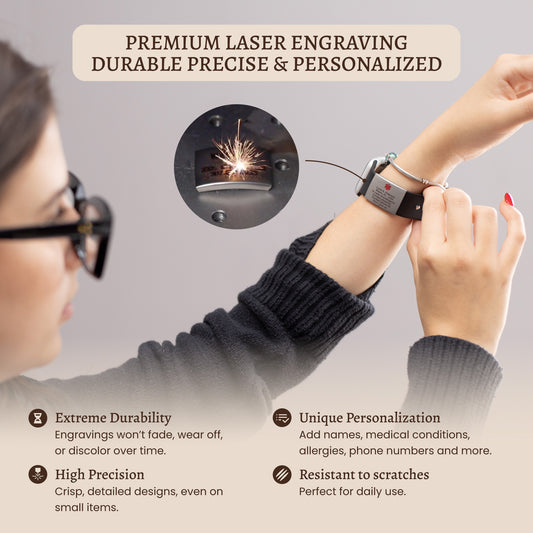
Medical ID Nameplate for Smartwatch Bands
Regular price From $18.50 USDRegular priceUnit price per
-
QR Code Medical ID Wallet Card
Regular price From $11.99 USDRegular priceUnit price per


Choosing the right piece
- Sensory-friendly: soft silicone and elastic bands with no clasp to fiddle with.
- If your child removes bracelets, try a watch-band tag or a shoe tag.
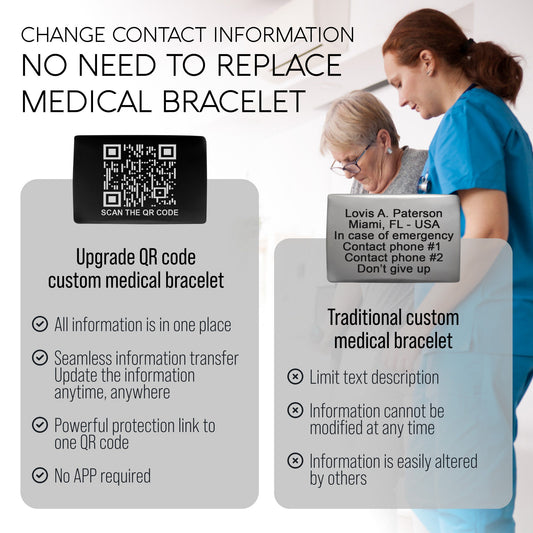
- A QR ID lets you update details without engraving a new piece.
- Let your child pick the color; they are more likely to keep it on.
Questions
What should an autism bracelet say?
Name, "Autism", how they communicate (for example "Non-Verbal") and a phone number that will be answered.
Are QR IDs useful for autism?
Yes. They hold more detail, like calming strategies and medical needs, and you can update them anytime.
My child takes bracelets off. What can I do?
Try a soft band with no clasp, a watch-band tag, or attach an ID to their shoes or backpack.
This page is general information, not medical advice. Ask your doctor what should be on your medical ID.