

Medical ID for dementia & Alzheimer's
A dementia ID helps strangers and responders understand confusion and memory loss, and helps bring your loved one home safely if they get lost. Personalized for free.
Why a medical ID helps with memory loss
People living with dementia or Alzheimer's may not remember their address, a caregiver's number or their medications. If they wander or are in an emergency, they may not be able to explain.
An engraved ID gives anyone helping them the essentials: that they have memory loss and who to call. It is often the fastest way to reunite a family.
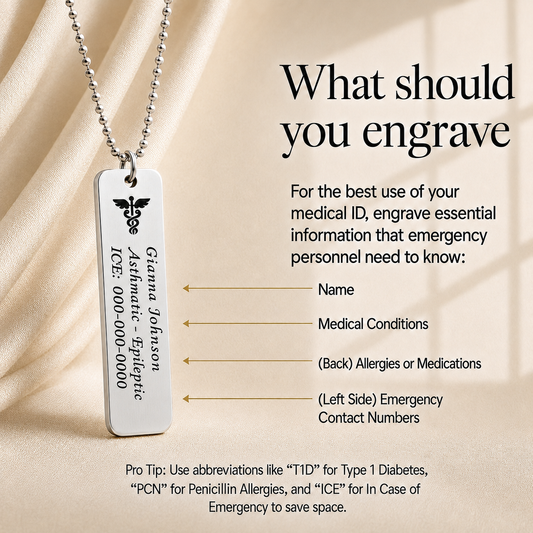
What to include
- Name
- "Memory Loss", "Dementia" or "Alzheimer's"
- "May Be Confused" if it helps explain behavior
- Key medications or conditions
- A caregiver phone number, ideally one that is always answered
Engraving examples
Choose a phone number that someone will always answer.
Simple and clear
Adds a key medication
Helps bring them home
Medical IDs for dementia & Alzheimer's
Pieces that are easy to wear and hard to lose, engraved at no extra cost.
-
Unisex Vertical Medical ID Necklace
Regular price $19.50 USDRegular priceUnit price per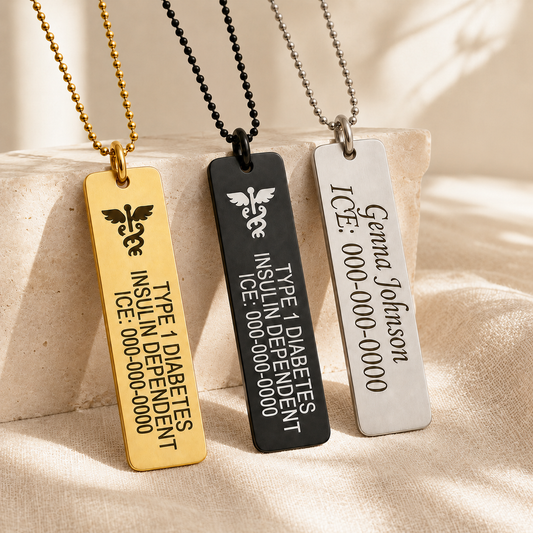
-
Women’s Medical ID Mesh Bracelet
Regular price $22.50 USDRegular priceUnit price per

-
Adjustable Medical ID Bracelet
Regular price $21.50 USDRegular priceUnit price per

-
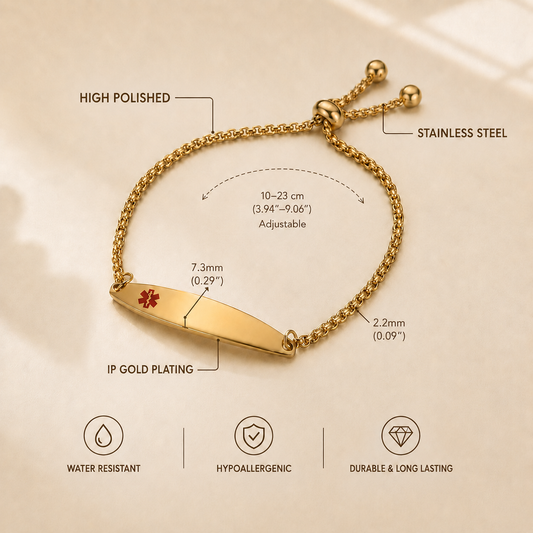
Custom Adjustable Medical Alert Bracelet
Regular price $21.50 USDRegular priceUnit price per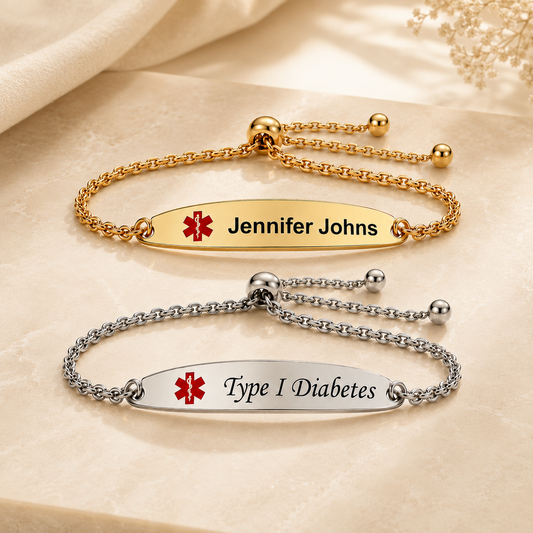
-
QR Code Medical ID Pendant Necklace
Regular price From $19.99 USDRegular priceUnit price per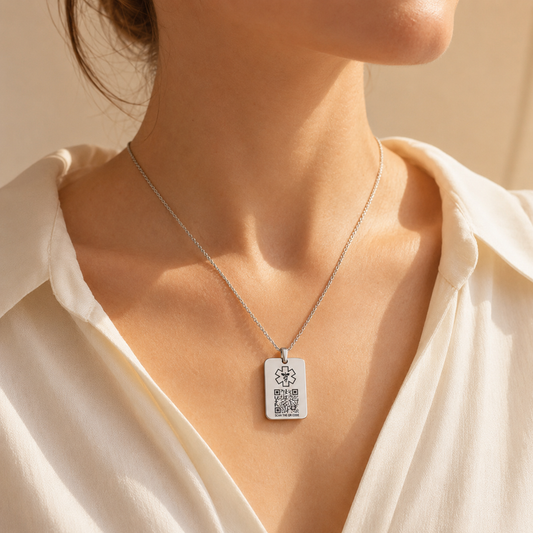

-
Military-Style Medical ID Necklace
Regular price $18.99 USDRegular priceUnit price per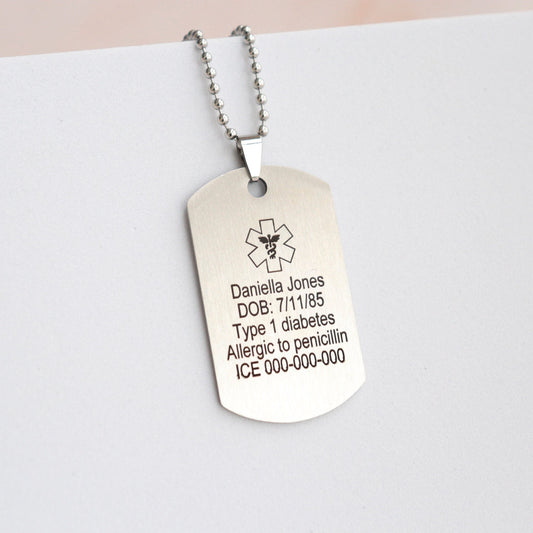
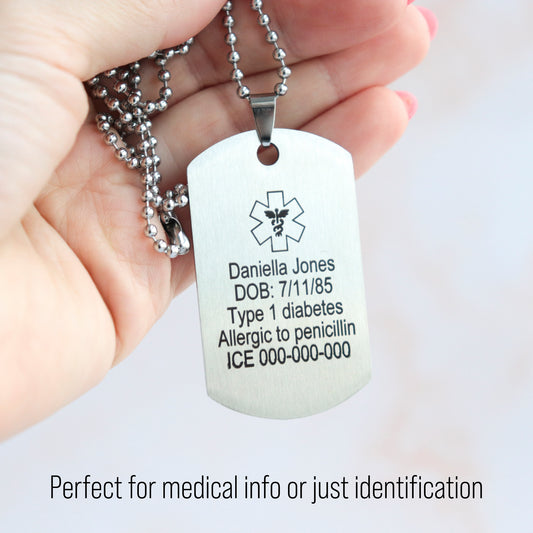
-
Personalized Medical ID Wallet Card
Regular price $14.50 USDRegular priceUnit price per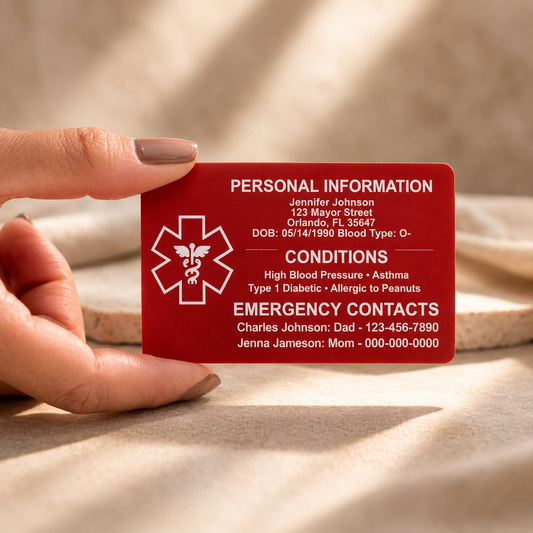

-
Personalized Cord ID Medical Bracelet
Regular price $21.99 USDRegular priceUnit price per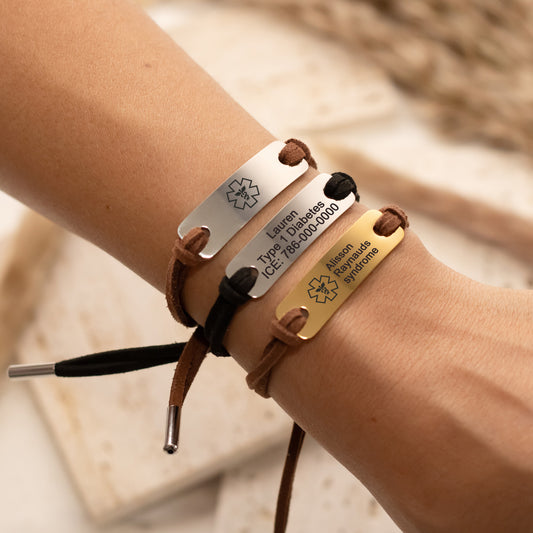


Choosing the right piece
- Choose a clasp the wearer won't take off easily; a necklace under clothing is another option.
- A QR ID can hold medications and doctor contacts that change over time.
- Pick something that looks like jewelry; people are more willing to wear it.
- Keep a matching wallet card in their purse or wallet.
Questions
Should I put an address on the ID?
Some families do, especially if their loved one walks alone. A phone number that is always answered is the most important line.
What if they keep taking it off?
Try a necklace worn under clothing, or a bracelet with a secure clasp that looks like everyday jewelry.
Is "Memory Loss" better than "Alzheimer's"?
Both are understood. "Memory Loss" plus "May Be Confused" explains behavior quickly to anyone helping.
This page is general information, not medical advice. Ask your doctor what should be on your medical ID.